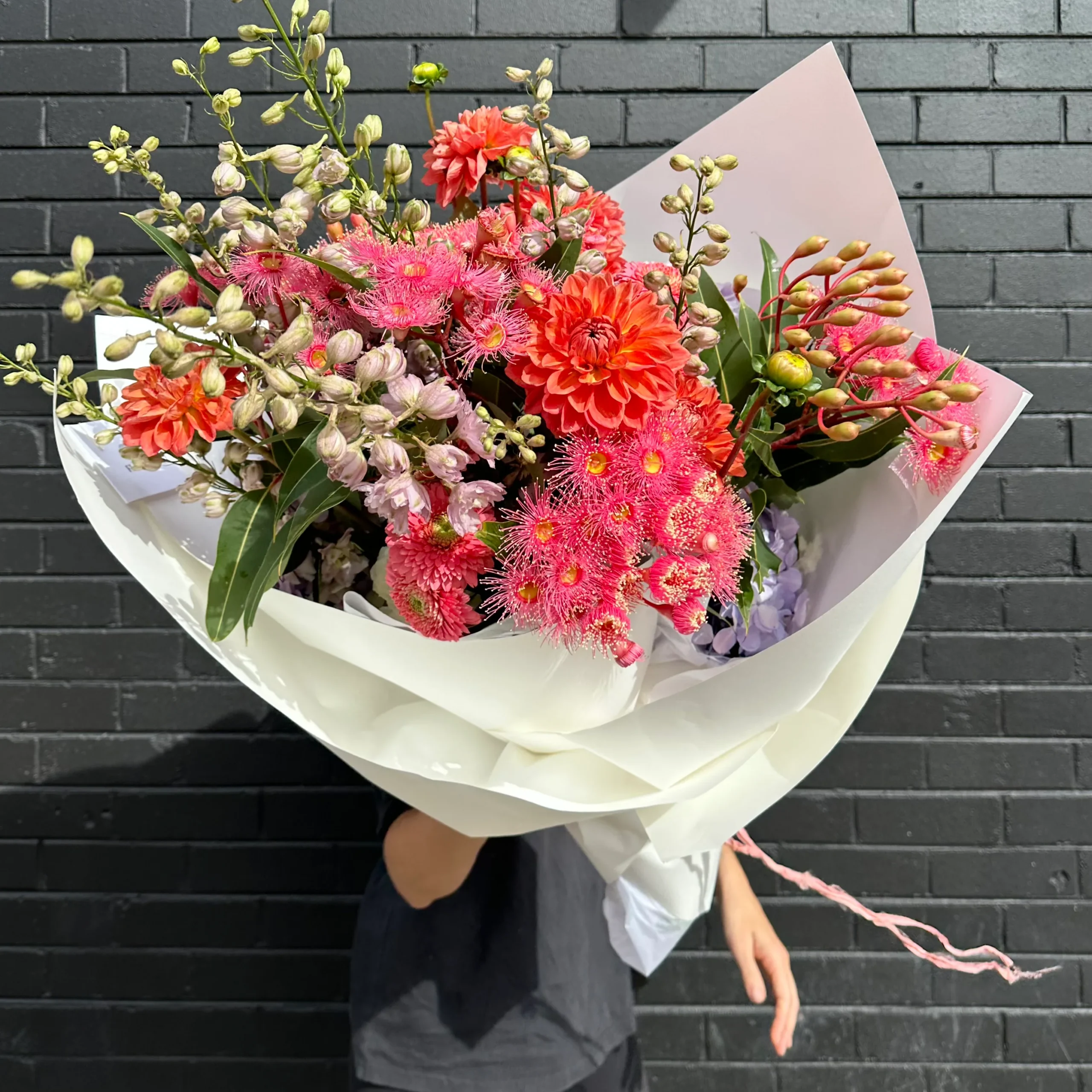
Flower Bouquet Delivery Sydney: Choosing the Right Thing
Most people ordering flower bouquet delivery Sydney wide pick a photo, pick a price and hope. It works often enough. But there are three or four decisions inside that order that change the outcome significantly, and nobody explains them at checkout.
This guide covers what the different bouquet formats actually are, how sizing works behind the scenes, what your money buys at each price point, and how to specify a bouquet so the result matches the intention.
The Formats, and When Each One Wins
Hand-tied bouquet. Built in the hand using a spiral technique, so the stems cross at a consistent angle and the bouquet stands on its own. Wrapped in paper, tied, delivered in water or a sleeve. The recipient trims and puts it in their own vase. This is the classic gift bouquet and the best value per stem, because you are not paying for glass.
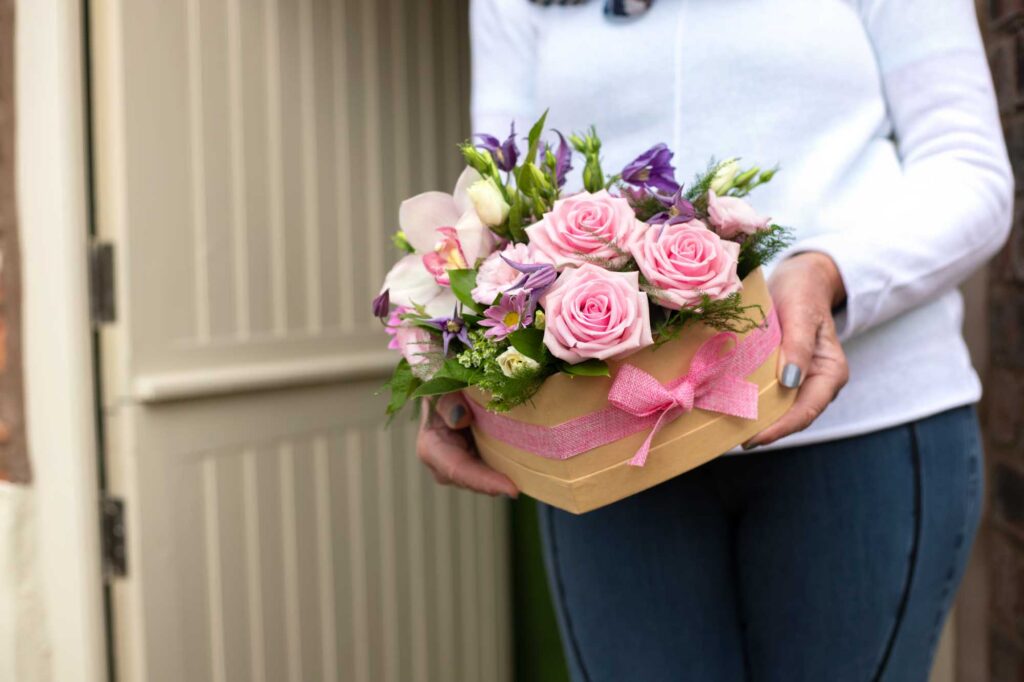
Vase arrangement. Designed directly into a vessel, delivered ready to place. Costs more for the same flower count because the vase is in the price, but requires nothing from the recipient. The right choice for hospitals, offices, elderly recipients and anyone who will not get to it for hours.
Wrapped or sheaf bouquet. Flat-backed, presented rather than round. Traditional for presentations, stage bouquets and sympathy. Looks generous in the arm and photographs well.
Posy. Small, compact, round, usually short-stemmed. Underrated. A good posy on a bedside table or a hall console reads better than a stretched-out large bouquet.
Long-and-low. For dining tables. Deliberately kept below sightline so people can see each other across it. Ask for it by name; almost nobody does.
How Bouquet Sizing Actually Works
Size labels vary between shops and mean nothing standardised. What actually determines a bouquet’s presence is three things.
Stem count. Obvious, and the one buyers focus on.
Stem length. A long-stemmed bouquet looks dramatically bigger for the same count. It also needs a taller vase, which is worth mentioning when you order.
Focal-to-filler ratio. Focal flowers are the ones your eye lands on – roses, peonies, hydrangea, protea, lilies. Fillers and foliage build volume around them. A bouquet padded with cheap filler looks large and cheap. A bouquet with a high focal ratio looks smaller and considerably more expensive. When you set a budget, say which you want.
This is why two $120 bouquets from different shops can look nothing alike. Same money, different ratio.
What Your Money Buys
Rough guide for flower bouquet delivery Sydney in 2026, buying direct from a workroom rather than through a platform:
- $60-80 – a genuine posy or a modest seasonal hand-tie. Best value if you let the florist choose in-season stems.
- $90-120 – the standard gift bouquet. Enough for a real focal group plus texture. Most orders sit here.
- $130-180 – generous. Long stems, multiple focal varieties, or specialty stems like peony in season.
- $200+ – statement work. Large-scale, specialty flowers, or vase arrangements with substantial vessels.
At every one of those points, the same rule holds: ask for “designer’s choice, in season, this is my budget” rather than picking a catalogue photo. Fixed products force a florist to buy named varieties whatever the market did that morning. A free brief lets them buy what was excellent and give you more of it.
What to Order by Season
Seasonal buying gets you fresher stems and more of them.
Spring (Sep-Nov): ranunculus, tulip, sweet pea, stock, freesia, garden rose, blossom branch. Peony for a genuine window in October and November – order ahead, it sells out. Best value quarter of the year for sheer volume.
Summer (Dec-Feb): hydrangea, dahlia, lisianthus, agapanthus, gardenia, orchid. Ask for morning delivery and heat-tolerant varieties. Hydrangea is spectacular but thirsty in Sydney heat.
Autumn (Mar-May): chrysanthemum in antique and bronze tones, dahlia, protea, banksia, celosia, berried and rust-toned foliage. Quietly the best-value season and the longest vase life of the year.
Winter (Jun-Aug): anemone, hellebore, magnolia branch, camellia, wattle, waratah. One flowering branch can be the entire arrangement, and it suits high-ceilinged Federation interiors perfectly.
Palette Advice Nobody Gives You
- Deep blues and purples disappear against green foliage and in dim rooms. They photograph beautifully and read as a dark hole on a hall table.
- Warm palettes carry further. Coral, peach, rust, cream and gold hold their own in leafy North Shore homes with a lot of existing green outside the window.
- All-white needs volume. A small white bouquet looks sparse; a generous one looks expensive. Do not order white on a tight budget.
- Yellow is the most underrated colour in flowers. It reads as cheerful rather than romantic, which makes it ideal for thank-yous, get-wells and birthdays.
- Two colours plus foliage beats five colours almost every time.
Coverage and Cut-Off Times
From a lower North Shore workroom, realistic same-day cut-offs:
Around 1pm: North Sydney, Cremorne, Cremorne Point, Neutral Bay, Kurraba Point, Mosman, Cammeray, Crows Nest, Waverton, Wollstonecraft, McMahons Point, Lavender Bay, Milsons Point, Kirribilli.
Around 11am to midday: Chatswood, Willoughby, Northbridge, Artarmon, Naremburn, St Leonards, Lane Cove, Greenwich, Riverview, Longueville, Linley Point, Roseville, Manly, Seaforth.
10am to 11am: Hunters Hill, Woolwich, Huntleys Cove, Huntleys Point, Gladesville, West Pymble, Clontarf, Balgowlah Heights, Allambie Heights.
Saturdays are earlier, usually 10am. If you have a day’s notice, use it – next-day orders get bought for specifically and conditioned before design.
Australian-Grown, and Why It Lasts Longer
NSW has a substantial commercial flower industry concentrated around the Sydney basin, the Hills District, the Central Coast and the coastal strip, documented in the state’s horticulture and primary industries resources. Those stems reach market hours after cutting rather than days after air freight.
The longevity difference is measurable, not marketing. Australian research on vase life determinants in cut foliage found harvest season was the dominant factor in how long stems held, and that proper postharvest treatment extended vase life by around 40% on average. Ask your florist where the flowers came from. A good one answers instantly.
Getting the Delivery Right
- Recipient’s mobile number. The single most valuable field on the order form.
- Precise access notes – building name, unit, reception desk, side gate, intercom code, dog.
- Flag surprises so nobody rings ahead.
- Offices before 3pm. Hospitals: check the ward’s flower policy; some units decline them.
- Apartments: authorise concierge or safe-drop in writing.
Write the card message out fully, including who it is from.
Nine Days Instead of Four•
- Recut stems 2cm at a 45-degree angle with sharp blades, immediately.
- Wash the vase in hot soapy water and scrub it. Bacteria is the number one killer.
- Strip every leaf that would sit below the waterline.
- Use the flower food sachet and dissolve it fully.
- Change the water completely every second day and recut.
- Keep it away from the fruit bowl – ethylene from ripening fruit ages a bouquet overnight.
- Out of afternoon western sun; cooler room overnight in summer.
The Bottom Line
Good flower bouquet delivery Sydney comes down to four choices: the right format for the recipient’s situation, a high focal ratio rather than cheap volume, a seasonal designer’s-choice brief instead of a catalogue photo, and a mobile number in the notes field. Get those right and a $100 bouquet will out-perform a $150 one every time.